Posted on

Are Lighter Discs Easier To Throw?

are lighter discs easier to throw 5/5 (1)

Disc weight can make a big difference in how a disc flies—and how easy it is to control. For newer players especially, choosing the right disc weight can help you get more distance, stay more accurate, and reduce fatigue over a full round.

In this guide, we’ll break down how lighter discs perform compared to heavier ones, and when it makes sense to use them on the course.

Do Lighter Discs Fly Farther?

Yes, in many cases, lighter discs can fly farther—especially for players with slower arm speeds. Because there’s less mass, you can generate more arm speed and spin with less effort. That extra velocity can translate into longer throws.

Here’s why lighter discs often go farther:

  • Faster arm speed: Less weight makes it easier to accelerate the disc.
  • Increased glide: Lightweight discs tend to stay in the air longer, especially on hyzer-flip or anhyzer lines.
  • More understable: Most lighter discs have more turn, which can help them stay aloft and gain distance for slower arms.

That said, lighter discs struggle in headwinds. They’re more affected by wind and less consistent in gusty conditions, so you’ll want to be careful when it’s breezy.

When Should You Throw a Lighter Disc?

Lighter discs shine in several scenarios, especially for newer players or those building up arm speed. Here’s when to consider one:

  • You’re a beginner: If you’re still developing your form and power, a disc in the 160–170g range is usually easier to control and throw far.
  • Tailwind shots: When the wind is at your back, lighter discs can ride the breeze for extra distance.
  • Uphill or touchy upshots: Lighter discs tend to hang in the air longer and require less effort, which helps with tricky approaches.

For example, discs like the Innova Leopard or the Dynamic Discs Maverick in lighter weights are excellent choices for smooth, controlled fairway shots.

Lighter Discs vs Heavier Discs: What’s the Difference?

It comes down to control versus distance. Heavier discs tend to be more stable and consistent in the wind. They’re often preferred by players who throw with power or need a disc that holds its line in tougher conditions.

Lighter discs are better for finesse, long glide, and maximum spin. They’re also easier on the shoulder over a long day of throwing.

Pros of Lighter Discs

  • Easier to throw with slower arm speed
  • Often get more distance for beginners
  • Great glide and hang time
  • Less fatigue over time

Cons of Lighter Discs

  • More affected by wind
  • Can be less predictable in rough or wooded courses
  • Might turn too much for faster throwers

If your local course is open and calm, lighter discs like the MVP Signal or Latitude 64 Diamond could give you a boost in both control and distance.

Does Disc Weight Affect Stability?

Yes, but it’s just one factor. A lighter version of the same disc will usually be a bit more understable than the heavier one. That means it will turn more easily and may not fade as hard at the end of the flight.

But remember: plastic type, nose angle, and your throwing form also impact stability. A lightweight disc doesn’t automatically mean it’ll be flippy—it depends on the mold and how you throw it.

So, Are Lighter Discs Easier to Throw?

For most new and developing players—absolutely. Lighter discs require less power to throw, give you more glide, and are easier to keep on line when you’re learning proper form.

If you’re just starting out, or if you’re looking to add a finesse shot or tailwind bomber to your bag, try a disc in the 160–165g range. You’ll likely find that it adds confidence and control to your game.

Explore our starter sets and lightweight fairway drivers to find the best fit for your skill level and throwing style.

Final Thoughts

There’s no one-size-fits-all answer when it comes to disc weight. It depends on your arm speed, experience level, course layout, and even the weather. But if you’re looking to gain distance without sacrificing control, a lighter disc might be exactly what your bag is missing.

For more beginner-friendly disc golf tips, check out our guide on how to throw farther.

Review This Disc

Posted on

What is Remix Disc Golf?

remix disc golf No ratings yet.

Remix Disc Golf is a newer name in the disc golf world, but it’s backed by some serious manufacturing power. A subsidiary of MVP Disc Sports, Remix focuses on producing low-cost, single-mold discs that are now PDGA-approved for competitive play.

While Remix discs are mainly found on Amazon right now, there’s growing interest as players realize these molds might share some DNA with brands like Thought Space Athletics and Mint Discs. In my experience, they’re surprisingly solid performers—especially for the price.

Here’s a quick rundown of the most notable discs in the Remix lineup, and what type of player or shot they’re best suited for.

Remix Discs: Mold Breakdown

Remix Battleship

  • Great for controlled approach shots and smooth midrange lines
  • Offers dependable fade without being overly dumpy
  • A good first midrange for new players or a workhorse for seasoned throwers

Remix Behemoth

  • Fast and stable, built for max-distance throws
  • Works best for players with high arm speed
  • Ideal for wide open fairways or tailwind crushes

Remix Eldritch

  • Shallow rim and straight-to-fade flight
  • Excellent for upshots and short tee throws
  • Reliable finish without skipping too far

Remix Goliath

  • Holds a line before finishing with dependable fade
  • Great for players dialing in power without sacrificing accuracy
  • A go-to for long fairway drives

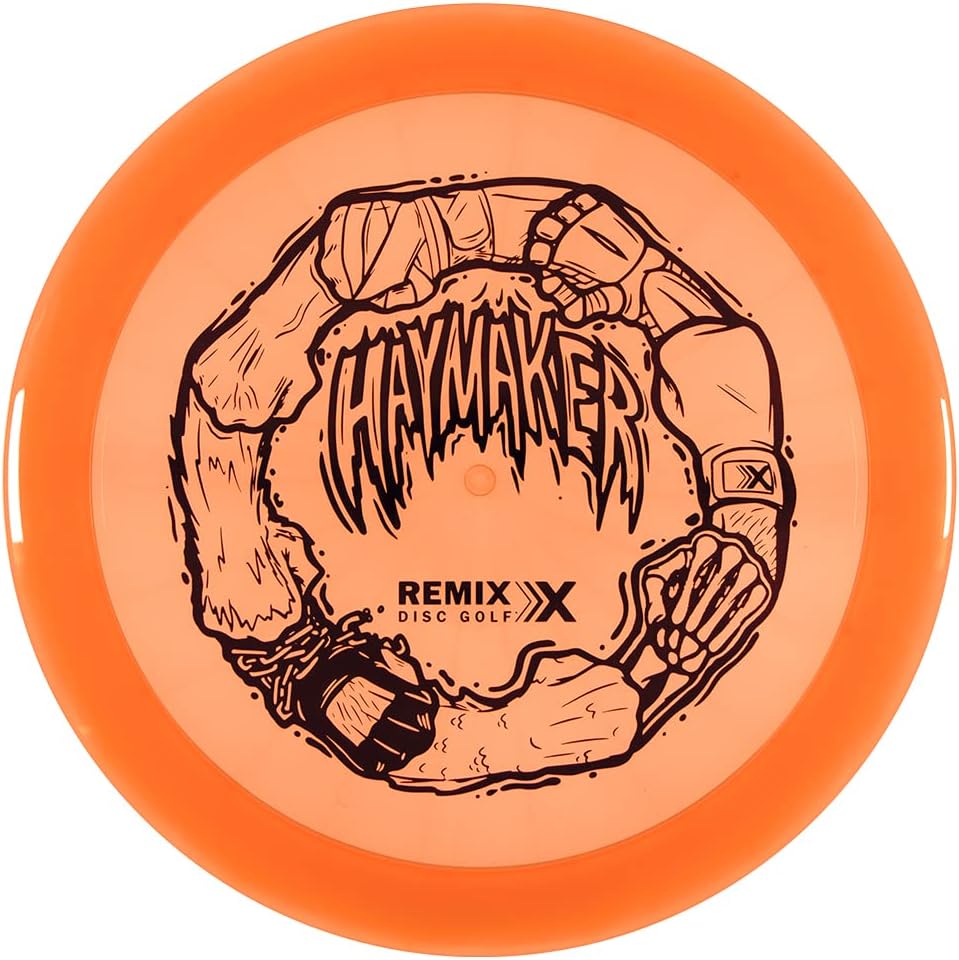
Remix Haymaker

  • Think flat-top Firebird or TSA Omen
  • Excellent wind-fighter and utility disc
  • Perfect for skip shots, forced hyzers, or forehands

Remix Juggernaut

  • Built for high-speed throws with late fade
  • Best suited for experienced players with big arms
  • Can be your max-distance driver in open conditions

Remix Ronin

  • Controlled, straight flight with gentle fade
  • Great for shaping lines and tight tunnel shots
  • A solid all-around fairway for players of all skill levels

Remix Rumble

  • Comfortable grip and clean release
  • Dependable for both putting and short tee shots
  • Predictable glide and finish

Remix Spartan

  • Fast, glidey, and forgiving
  • Helps newer players unlock more distance
  • Also a nice hyzer-flip option for advanced arms

Remix Torpedo

  • Stable flight like a Discraft Buzzz or TSA Pathfinder
  • Handles both backhand and forehand lines well
  • Glides straight with just enough fade to sit down cleanly

Remix Troll

  • Neutral stability with subtle turn and finish
  • Can hold hyzer, anhyzer, or flat lines with ease
  • One of the most versatile discs in the Remix lineup

Final Thoughts: Is Remix Worth Bagging?

If you’re looking for budget-friendly discs that perform surprisingly well, Remix Disc Golf is worth checking out. They offer a full lineup—from putters to distance drivers—and their plastics feel consistent with MVP’s quality.

While we don’t carry Remix discs at Altitude Disc Golf just yet, we’re keeping an eye on how the brand evolves. For now, you can find them on Amazon.

Whether you’re new to disc golf or just looking for affordable options to test out new shot shapes, Remix discs give you a lot of value for the price.

Review This Disc

Posted on

What The Heck Is A Turbo Putt?

what is a turbo putt 5/5 (1)

What is the Turbo Putt?

If you haven’t seen a turbo putt before, it’s a real show-stopper. This isn’t your typical putting style in disc golf—it’s different, creative, and when done well, downright effective. Essentially, you hold the disc up around shoulder height, almost like you’re holding a pizza up to serve someone. Then you push the disc forward while giving it spin—kind of like throwing a football or a dart. 

Here’s what’s going on:

  • You hold the disc at shoulder (or head) level.
  • The thumb sits under the disc, and your fingers fan out along the rim.
  • You push the disc forward while generating spin—so the disc travels straight-ish, and then (for a right-handed player) it will fade to the right. 

“In disc golf, a turbo putt is a shoulder- or head-level putting style in which the thumb pivots on the underside of the disc, while the remaining four fingers fan out along the outer edge of it.”

How To Throw A Turbo Putt

Step 1: Stance & Grip

Start by setting up like you’re about to throw a baseball or a dart: adopt a split stance. If you’re right‐handed, your right foot goes slightly ahead of your left. Then for the grip: place your thumb under the disc at its center, and let your other four fingers go along the rim to support it.

Step 2: Disc Positioning

Raise the disc so it’s above your shoulder, ready to “serve” it forward, like a waiter holding a tray at shoulder level. This high release point is one of the big advantages of the turbo putt.

Step 3: The Forward Push + Spin

From here you push the disc forward in a motion similar to an over‐the-shoulder throw. At the same time, you’ll generate spin—especially via the fingers/rim contact rather than just flicking your wrist.

Important details:

  • You’re throwing *downwards* toward the basket—not level or upward. If you aim flat or upward you’ll likely miss. 
  • Don’t over-spin. Many beginners try to force too much spin; instead focus on a smooth forward push that lets the disc spin naturally off your hand.
  • Since the disc is spinning “the opposite way,” for a right-handed throw the fade will be to the *right*, not left. That’s key when you’re reading your putt.

Step 4: Adjusting Angle (Hyzer/Anhyzer)

Want to dial it in for a tricky line? You can adjust the release angle by shifting where the disc contacts your fingers along the rim edge. By tilting the edge up or down you can introduce hyzer or anhyzer into your turbo putt.

Why Use a Turbo Putt?

This style might look unconventional, and you’ll rarely see it as the primary putting style among pros—but there are very real reasons to have it in your bag.

Reason 1: It Fits Your Style

If you’ve developed confidence and success with turbo putting, stick with it. It’s all about what you’re comfortable with and what gives you results.

Reason 2: High Release Over Obstacles

One major strength: the elevated release point. Need to putt over a bush, branch, or other obstruction? A turbo putt gives you that height advantage.

Reason 3: Around Objects / Tight Spots

Rather than straddling or contorting your body around a tree or obstacle, you can step back, bring your arm out, and fire a turbo putt around the object. Another tool in your arsenal.

Reason 4: Workaround for Flexibility or Mobility Limits

If you’ve got past injuries or tight hips/legs that make straddling or awkward stances tricky, this technique offers a less taxing alternative.

Reason 5: The Bush Shot Specialist

When you’re deep in the woods, jammed into bushes near the green, a turbo putt can be your go-to. Arm out over the branches, disc up high, spin it in. There’s not much else like it.

Reason 6: It’s Fun

Yes—that’s right. Turbo putting adds a little flair. If nothing else, it’s a conversation piece on the course. Mastering it can be as satisfying as it is effective.

Wrap-Up & Final Thoughts

If you’re still unsure whether to try the turbo putt, here’s the bottom line:

  • It’s not meant to replace your core putting style—it’s a *supplement*.
  • When obstacles, bushes, or tricky green layouts hit, this style can shine.
  • Take it slow, practice the mechanics: stance → grip → high release → forward push with spin.
  • Keep the disc low to the ground angle-wise (i.e., downward release) rather than flat-level. That downward push is key for accuracy.

Have fun with it, build confidence, and don’t be afraid to pull it out when the situation calls for it. Let that turbo putt be your hidden weapon.

Want to upgrade your putting game? Check out our Putters & Approach Discs section or browse our full selection of discs. For more advanced turbo-style training discs you might also explore options at InfiniteDiscs.com.

Video Tutorial

Still visualizing? Here’s a helpful link to see the turbo putt in action: Turbo Putt Demonstration (on YouTube).

Review This Disc

Posted on

Is Disc Golf Hard?

is disc gold hard No ratings yet.

Disc golf looks simple: throw a disc toward a basket and keep score like golf. But if you’re new, it can feel tricky. In my experience, the game is only “hard” when we jump in without the right discs, basic form, or a plan for practice. The good news—anyone can improve quickly with a few smart choices.

So…Is Disc Golf Hard?

Short answer: it can be at first. Long answer: it gets easier fast when you build good habits. Most players struggle early with consistency, distance, and putting. With the right discs and some focused practice, you’ll see progress in weeks—not years.

Why Disc Golf Feels Hard at First

  • Accuracy under pressure: Hitting a line through trees takes reps.
  • Limited throws: Every throw counts, so early mistakes feel costly.
  • Uneven terrain: Hills, wind, and footing change your throw.
  • Obstacles: Trees, rough, and out-of-bounds force smart decisions.
  • Focus: Small lapses—talking, rushing, scrolling—lead to misses.

How to Make Disc Golf Easier (Fast)

1) Start with Beginner-Friendly Plastic

Choose slower, understable molds in lighter weights. They’re easier to control and help you learn clean form. A budget-friendly way to start is a disc golf starter set, which includes a putter, midrange, and driver chosen for new players.

If you want an even simpler setup, try a two-disc kit with a putter and easy driver like this Divergent 2-Disc Beginner Set. It keeps cost down and shortens the learning curve.

2) Learn One Clean Throw First

You don’t need every shot on day one. Dial in a smooth backhand with a neutral midrange or fairway. Focus on a flat release, chest-high reach back, and a balanced follow-through. Once that’s consistent, add hyzers, anhyzers, and forehand.

3) Technique Over Power

Power comes from clean mechanics, not muscling the disc. Shorten your run-up, keep your head calm, and feel the disc rip from a loose grip—not a tight squeeze. As your form cleans up, distance shows up.

4) Pick Lines You Can Hit

Map the fairway from tee to landing zone like chess. If a straight gap at 220 ft is your shot, play it—even if a hero line could go farther. Scoring well is about placement, not max distance.

5) Build a Simple Putting Routine

Putting turns “hard” into “manageable.” Practice 10–15 minutes, 4–5 days a week. A target makes practice easy at home; explore our practice baskets to build confidence from 15–25 feet.

6) Use the Right Fairway Driver

Newer arms often benefit from an understable fairway that flips up and glides. One I like for developing players is the Innova Sidewinder (Star). It’s workable for hyzer-flips, gentle turnovers, and learning angle control.

7) Create a 30-Minute Practice Plan

  • 5 minutes: standstill midrange throws (form focus).
  • 10 minutes: fairway shots at one target (same disc, same line).
  • 10 minutes: putts from 15–25 ft (routine + pace).
  • 5 minutes: approach touch (forehand or backhand) inside 150 ft.

Track makes/misses. Small, repeatable sessions beat occasional marathons.

8) Play with Better Players

Ask local cardmates about disc choices and lines. Most disc golfers are happy to help. You’ll pick up course management quicker than you think.

9) Set Realistic Goals

Examples: “No double-bogeys for nine holes,” or “Make 7/10 putts from 20 ft.” Clear, simple targets build momentum and keep rounds fun.

10) Keep It Affordable and Enjoyable

You don’t need a huge bag. A putter, a midrange, and a fairway driver can shoot great scores. If you’re curious about what drivers make sense early on, here’s a helpful read: Best Disc Golf Drivers for Beginners. Start small, upgrade as your form improves.

Recommended Beginner Builds

Budget-Friendly (2 Discs)

  • Putter for putting + approaches
  • Understable fairway driver for controlled distance
  • Optional: Add the 2-Disc Starter Set if you want an easy, low-cost bundle.

Balanced Starter Set (3 Discs)

  • Putter (circle putts + short approaches)
  • Neutral/understable midrange (straight practice)
  • Understable fairway driver (hyzer-flip distance)
  • See current options in our Starter Sets.

Single Disc to Learn Angle Control

The Bottom Line

Disc golf can feel hard at the start, but it becomes a lot easier with the right discs, simple practice, and smart course choices. Keep the bag small, work on clean form, and build a putting habit. If you do that, scores drop fast—and you’ll have more fun each round.


Want help choosing discs? I’m happy to recommend a simple setup based on your skill level and typical course. Tell me what you’re throwing now, and I’ll suggest an affordable upgrade path.

Review This Disc

Posted on

What Makes A Disc Overstable?

what makes a disc overstable No ratings yet.

If you’ve ever heard players talk about an “overstable disc” and wondered what that means, you’re not alone. Stability is one of the most important parts of disc golf flight, and understanding what makes a disc overstable can help you choose the right disc for your bag.

What Does Stability Mean in Disc Golf?

Stability describes how a disc flies once it leaves your hand. For a right-handed backhand thrower (RHBH):

  • Stable discs fly mostly straight.
  • Overstable discs fade left earlier and more consistently.
  • Understable discs tend to drift right before fading back.

Every player’s arm speed and throwing style can influence how stable a disc feels, but flight ratings give a useful starting point.

What Is “Turn” in Disc Golf?

Turn is the third number on a disc’s flight rating. It shows how much a disc tends to drift right (for RHBH throws) at high speeds:

  • +1 = Very overstable, resists turning over
  • 0 = Neutral or stable
  • -1 to -5 = Understable, with more high-speed turn

What Does Overstable Mean?

An overstable disc resists turning and finishes with a strong, reliable fade. These discs are designed to handle power without flipping over, making them trustworthy in the wind and on shots that require precision.

What Physical Features Make a Disc Overstable?

Several design factors affect whether a disc is overstable:

  • Rim width: Wide-rimmed drivers tend to be more overstable.
  • Dome vs. flat: Flatter discs are usually more overstable, while domey discs often glide more and feel less stable.
  • Beads: Putters and mids with a bead often fly more overstable.
  • Parting line height: As Innova founder Dave Dunipace explains, discs with a higher parting line (the separation line on the nose) are more overstable, while lower lines indicate more understability.

Which Plastics Are More Overstable?

The plastic blend you choose can make a big difference in stability. For Innova discs, the general order from most to least overstable is:

  • Champion / Metal Flake
  • Star
  • XT
  • DX and Blizzard

Durability also matters. More durable plastics like Champion stay overstable longer, while baseline plastics like DX beat in quickly and become more understable over time.

When Should You Use an Overstable Disc?

Overstable discs are useful for many types of controlled shots:

  • Spike hyzers: Steep angles with a guaranteed fade finish.
  • Skip shots: Reliable ground play that skips toward the target.
  • Windy rounds: Overstable discs handle headwinds better than understable discs.
  • Forehand throws: Extra torque resistance makes them dependable for sidearms.

They’re especially valuable for advanced players with higher arm speeds, since these players can throw with more power without flipping the disc over.

Great Overstable Discs to Try

If you’re looking to add an overstable disc to your bag, here are a few proven options:

Innova Destroyer – A go-to overstable distance driver trusted by many pros.

Discraft Zone – A popular overstable putter for approach shots and forehands.

Innova Firebird – Known for its reliable fade, ideal for forehands and wind.

Innova Wraith – A distance driver with glide, accuracy, and stable control that works well for both forehand and backhand players.

Axiom Envy – Famous for the “holy shot” at Worlds, the Envy is one of the best throwing putters ever, handling both power and touch shots.

Envy

Infinite Discs Emperor – A commanding overstable driver with great glide, trusted by many Infinite-sponsored players.

Final Thoughts

To recap, overstable discs resist turning, fade more reliably, and perform best in high-power throws and windy conditions. Design features like rim width, parting line height, and plastic type all influence stability. If you want a disc that won’t flip on you and delivers consistent finishes, an overstable mold is a smart choice.


Review This Disc

Posted on

Are You Committing a Disc Golf Foot Fault?

disc golf foot fault No ratings yet.

Foot faults are one of the most common rules violations in disc golf, especially for newer players. When I first started playing, I didn’t pay much attention to where my feet were when I threw. That changed once I saw professionals getting called for foot faults during tournaments. Understanding this rule can save you strokes and frustration on the course.

Disc golf: The only foot fault I call without shame

What Counts as a Foot Fault?

A foot fault happens when your supporting points (usually your feet) are not in the correct position at the time you release the disc. Depending on whether you’re putting, driving, or throwing from your lie, the exact requirements change. Let’s break it down.

Inside the Circle

When you’re putting from inside the 10-meter circle:

  • You must show balance after the release.
  • You cannot step past your lie until you’ve demonstrated balance.
  • Moving forward too early is a foot fault and results in a penalty stroke.

To avoid this, pause after your putt, set your back foot down, or pick up your mini before moving forward. This demonstrates control. For the official rule, see PDGA Rule 806.01.

Teeing Off

On the tee pad, the rules are clear:

  • At least one foot must be in contact with the teeing area at release.
  • All supporting points must be inside the teeing area when you release the disc.
  • You may step outside the teeing area before or after the release, but not during.

Violating these requirements results in a penalty stroke. Learn more in PDGA Rule 802.04.

Throwing from Your Lie

Most shots come from your lie in the fairway. Here are the basics:

  • At least one supporting point must be in contact with your lie (the rectangle behind your marker).
  • No supporting point can be closer to the basket than the rear edge of your marker disc or mini.
  • Stepping too far forward or throwing with your foot over the marker is a foot fault.

Review PDGA Rule 802.07 for full details.

Defining the Lie

Your lie is the designated area behind where your disc comes to rest. Unless you are on the tee or in a drop zone, the lie is a 20cm wide by 30cm deep rectangle directly behind your disc or mini marker.

Not having a foot in contact with this rectangle during your throw is a foot fault. See PDGA Rule 802.05 for specifics.

Marking Your Lie

You can either leave your disc in place or use a mini marker. If you use a mini:

  • Place it directly in front of your disc, touching the front edge.
  • It must be placed toward the basket, not to the side.

An incorrect marking results in a warning for the first violation and a penalty stroke for repeated violations. Learn more in PDGA Rule 802.06.

Why It Matters

In casual rounds, your friends may not care much about strict rule enforcement. But if you’re preparing for organized play or tournaments, foot faults will cost you strokes. Learning these rules now builds good habits and keeps your scorecard clean.

Final Thoughts

Disc golf is about having fun, but it’s also a sport with rules that make competition fair. Knowing how to avoid foot faults is part of becoming a better player. If you’re new, I recommend carrying a mini marker disc and practicing proper footwork. That way, when tournament time comes, you won’t have to worry about giving away strokes for simple mistakes.

For full details, always refer to the PDGA Official Rules of Disc Golf. It’s the best resource for every rule question you may have.

Review This Disc

Posted on

How To Dye Disc Golf Discs?

how to dye disc golf discs No ratings yet.

One of the best parts of disc golf is making the game your own. Beyond choosing discs that fit your throw, you can also customize them with unique designs. Dyeing discs has become a popular way for players to add personality and flair to their gear. In this guide, I’ll walk you through how to dye disc golf discs, step by step, and share a few creative techniques to try.

Easy Double Rainbow Cell Dye - Floetrol Disc Dye Tutorial - #fluidart  #discgolf

Choosing the Right Disc for Dyeing

The best discs to dye are light in color, like white or light gray. These give the dye more contrast and allow colors to pop. Premium plastics tend to hold dye best, including:

  • Innova Star and Champion plastics
  • Discraft Z-Line plastic
  • Other premium blends with durable, smooth surfaces

Baseline plastics don’t always take dye as well and may fade faster with use.

Picking the Right Dye

Not all dyes bond well to disc golf plastics. The most reliable choices are synthetic-friendly dyes like:

  • iDye Poly
  • RIT DyeMore (not regular RIT)
  • Jacquard iDye

These are specifically designed for plastics and produce vibrant, lasting colors.

Essential Materials

Before starting, gather these supplies:

  • A light-colored disc golf disc
  • Stencil paper or a vinyl cutter
  • Adhesive spray
  • Dye and a plastic container
  • Hot water and a stirring stick
  • Gloves and rubbing alcohol
  • Paper towels

Step-by-Step Disc Dyeing Process

Step 1: Prepare the Design

Create your stencil using a vinyl cutter or stencil paper. Spray adhesive on the back and carefully attach it to your disc.

Step 2: Mix the Dye

Put on gloves and mix the dye with hot water according to the package instructions. Stir until fully dissolved.

Step 3: Submerge the Disc

Place the disc in the dye bath, using a spoon or stick to hold it under. Leave it submerged for about 20 minutes, or longer for darker colors.

Step 4: Rinse and Remove Stencil

Rinse the disc under cold water to remove excess dye. Peel off the stencil, and if adhesive remains, use rubbing alcohol to clean it off.

Step 5: Dry and Finish

Pat the disc dry with paper towels. Once it’s fully dry, it’s ready to throw—or to show off.

Other Disc Dyeing Techniques

Dip Dyeing

This method creates a gradient effect by dipping part of the disc into the dye, pulling it out slowly, and repeating until the look is right. It’s simple, but it can be messy, so always wear gloves and work in a ventilated area.

Shaving Cream Method

Spread shaving cream on a tray, add drops of dye, and swirl with a stick to create marbled patterns. Press the disc face into the mixture, leave it to set, then rinse it off. The result is a unique, one-of-a-kind design.

Safety Tips

  • Wear gloves to protect your skin from dye and chemicals.
  • Work in a ventilated space to avoid inhaling fumes.
  • Dispose of dye and materials responsibly.

Final Thoughts

Dyeing discs is a fun, creative way to personalize your gear. Start with a light-colored premium plastic, use the right dye, and try out different techniques. With a little practice, you’ll have discs that not only fly great but also stand out on the course.

If you’re still building your collection, check out our selection of disc golf discs and experiment with dyeing a few of your extras. It’s a great way to combine art with the sport we love.

Review This Disc

Posted on

How Much Do Professional Disc Golfers Make?

how much do pro disc golfers make No ratings yet.

For many disc golfers, the dream is simple—turn your passion into a profession. One of the most direct ways to do that is by going pro. But before you make that leap, it’s natural to ask: how much do professional disc golfers actually make?

Professional Disc Golf Pay Scale

disc golf pay

Professional disc golf earnings can vary widely. Back in 2018, reports estimated the average annual income for a touring pro around $116,000, with the top tier earning well over $200,000. While those numbers can fluctuate year to year, it gives a good idea of the earning potential for elite players.

How Do Professional Disc Golfers Make Money?

A Fitting Finale: Ricky Wysocki, Kristin Tattar Win the DGPT Championship -  Ultiworld Disc Golf

Unlike traditional sports, disc golfers usually combine several income streams to make a living. Here’s where most of their money comes from:

Tournament Winnings

Cash payouts are the most obvious source of income. The bigger the event, the higher the payout. For example, the USDGC (United States Disc Golf Championship) has awarded tens of thousands of dollars to top finishers. Winning a major tournament can make a big difference in a player’s season earnings.

Sponsorships

Major manufacturers like Innova and Discraft sponsor many top pros. Sponsorship deals often include a salary, travel support, and, of course, discs and gear. Sponsored players throw only that company’s products, helping promote their brand on tour.

Signature Discs

Many pros have their name on a signature disc. Every time a disc with their stamp sells, they earn a small royalty. These discs are extremely popular among fans, making them a reliable income source for top players. For example, the Innova Destroyer has featured multiple pro player stamps over the years.

Clinics, Coaching, and Media

Some professionals supplement their income by running clinics, offering private coaching, or producing training materials. Others build audiences on platforms like YouTube—Eagle McMahon’s Eagle’s Vlog is a well-known example. Media appearances and commentary opportunities are also growing as the sport continues to expand.

Launching a Brand

Several pros have started their own disc golf brands or partnered with companies to create custom lines of discs, apparel, or accessories. These ventures can become long-term income streams that last beyond a player’s touring years.

Final Thoughts

Professional disc golf isn’t an easy path, but it’s more possible than ever to make a living on the course. Between tournament winnings, sponsorships, signature discs, and side projects, today’s pros have multiple ways to support themselves while growing the sport. Whether you’re chasing that dream or just curious, it’s exciting to see disc golf evolving into a viable career.

Review This Disc

Posted on

What If The Disc Lands On Top Of The Basket?

what if disc lands on top of basket No ratings yet.

It’s a situation just about every disc golfer has run into: You line up a putt, release it clean, and it flies straight toward the chains… only to land squarely on top of the basket. Now what? Does that count as a made putt?

Let’s clear it up using the official PDGA rulebook and some practical examples so you’ll always know what counts—and what doesn’t.

Does It Count If the Disc Lands on Top?

No—it does not count. According to PDGA Rule 807.B:

“In order to complete a hole with a basket target, the thrower must release the disc and it must enter the target above the top of the tray and below the bottom of the chain support, and come to rest supported by the target.”

If the disc lands on the top of the cage, even if it seems like an amazing shot, it doesn’t meet the entry requirement. You’ll need to mark it and take another throw.

You can read the full rule here on the PDGA website.

Possible Exception: Bounce Out

There is one rare situation that confuses players: What if the disc does enter through the chains properly, then bounces out and lands on top of the basket?

Even in that case, it still doesn’t count. The disc must come to rest supported by the target. If it lands on top after bouncing out, it’s not resting in the target area as defined by the rules.

What If the Disc Gets Stuck on the Side?

This one depends on how the disc got there.

  • If it entered the basket correctly (between the chain support and the top of the tray) and then wedged itself onto the side—it counts.
  • If it simply flew in from the side or above and stuck to the outer edge—it doesn’t count.

Disc Hits the Chains but Bounces Out—Does It Count?

Unfortunately, no. Even if the disc flies through the chains or hits the pole, it must come to rest supported by the target. If it hits and falls to the ground, it’s still in play.

Disc Flies Into the Front of the Basket

Let’s say you have an old or damaged basket and somehow your disc slides in from the front and comes to rest inside. Technically it’s inside the cage… but it doesn’t count.

The way a disc enters the target matters. If it didn’t enter from above the tray and below the chain support, it’s not valid.

Disc Rests Against the Pole on the Ground

This is another tricky one. If your disc hits the chains and falls to the ground, coming to rest against the center pole, that still doesn’t count.

Yes, the pole is part of the basket. But the disc is also touching the ground, so it’s not being fully supported by the target.

How to Make the Right Judgment Call

There are two questions you should ask whenever you’re not sure if a putt counts:

  1. Did the disc enter the target through the correct zone?
    (Above the tray and below the chain support)
  2. Is the disc resting supported by the target?
    (Not the ground, not the top, not wedged on the outside)

If the answer to both is yes, you’ve made the putt. If either answer is no, it doesn’t count.

Want a Visual Explanation?

Here’s a helpful video that walks through several real-life examples: Watch on YouTube

Final Thoughts

Most of the time, you won’t run into these edge cases during casual rounds. But if you’re practicing for tournaments or just want to keep things fair, it helps to understand what counts as a completed hole.

Stick to the basics: correct entry + supported by the basket = made putt. Knowing the rule gives you confidence on the course—and could save you a stroke when it matters most.

If you’re looking to upgrade your gear for competitive rounds, check out our full selection of disc golf baskets and disc golf discs.

Review This Disc

Posted on

Disc Golf Glide, What Disc Has The Most Glide?

disc golf discs wit best glide No ratings yet.

Discs With the Best Glide in Disc Golf

In disc golf, glide measures how well a disc stays aloft during flight. More glide means the disc carries farther with less effort. While speed and turn also affect distance, glide can make the difference between laying up short or reaching the basket. If you’re looking to maximize distance without extra power, choosing a disc with a high glide rating is a smart move.

Top Discs With High Glide Ratings

Innova Tern

The Innova Tern is a distance driver that pairs speed with glide. Its flight numbers are:

  • Speed: 12
  • Glide: 6
  • Turn: -3
  • Fade: 2

The Tern’s understability makes it friendly for newer players who want extra carry. It excels on hyzer flips, long flex lines, and wide hyzers once it’s seasoned in. Just note the wide rim (2.4 cm), which may take some adjustment.

Discraft Heat

HeatThe Discraft Heat is a popular control driver known for effortless distance. Its tall dome adds natural lift, giving it plenty of carry. Flight numbers:

  • Speed: 9
  • Glide: 6
  • Turn: -3
  • Fade: 1

With a -3 turn and high glide, the Heat is perfect for hyzer flips and long turnovers. Players with slower arm speeds will especially benefit from how easy it is to push this disc down the fairway.

Innova Roadrunner

RoadrunnerThe Innova Roadrunner is a control driver with one of the most understable flight paths in Innova’s lineup. Flight numbers:

  • Speed: 9
  • Glide: 5
  • Turn: -4
  • Fade: 1

The Roadrunner is a reliable option for beginners who want straight or turnover shots that stay in the fairway. More advanced players often use it as a roller disc. Its minimal fade makes it easy to control at lower speeds.

MVP Impulse

ImpulseThe MVP Impulse is one of the most beginner-friendly drivers from MVP. Designed with a comfortable rim and reliable turn, it gives players smooth, controlled distance. Flight numbers:

  • Speed: 9
  • Glide: 5
  • Turn: -3
  • Fade: 1

MVP’s GYRO technology adds extra stability by concentrating weight in the outer rim, resulting in straighter, more consistent flights. The Impulse is a great stepping stone for players learning to shape distance lines.

Innova Sidewinder

The Innova Sidewinder shares similar numbers to the Roadrunner but offers slightly more resistance to turning. Flight numbers:

  • Speed: 9
  • Glide: 5
  • Turn: -3
  • Fade: 1

This makes the Sidewinder more versatile, handling a bit more power before flipping over. It’s a great all-around driver for straight shots, turnovers, and long hyzer flips.

Prodigy D3 Max

D3 MaxThe Prodigy D3 Max is a fast driver with impressive glide for players who want maximum distance. Flight numbers:

  • Speed: 13
  • Glide: 5
  • Turn: -2
  • Fade: 2

While newer players may find the rim wide and the speed demanding, it rewards developing arms with long, sweeping flights. It shines on hyzers and flex shots that need extra carry.

Discmania Mentor

The Discmania Mentor is a distance driver designed for beginners and developing players. Flight numbers:

  • Speed: 11
  • Glide: 5
  • Turn: -2
  • Fade: 2

The Mentor balances speed and control. Beginners can use it for learning distance drives, while experienced players can hyzer flip it for turnovers and long straight shots.

Why Glide Matters

Glide is one of the most important flight ratings when choosing a disc. More glide means:

  • Discs stay in the air longer, carrying farther.
  • Extra distance with less effort.
  • Better performance for players with slower arm speeds.

High-glide putters and midranges can give you extra carry on approaches and putts, while drivers with high glide add distance to your tee shots. Even 10–15 extra feet can make a difference in scoring over the course of a round.

Final Thoughts

If you’re new to the game, start with understable, high-glide discs like the Heat, Roadrunner, or Impulse. These will help you learn form while still getting distance. As your power develops, discs like the Tern, Sidewinder, or D3 Max will add variety to your bag. Choosing the right glide rating for your skill level can give you easier distance and a better chance of lowering your scores.

Review This Disc